



Latest Blog Posts

DS1302 and DS1307 RTC Real-Time Clock
I will explain the features of the DS1302 and DS1307 RTCs and show how to control them with the Rtc by Makuna library.
Read More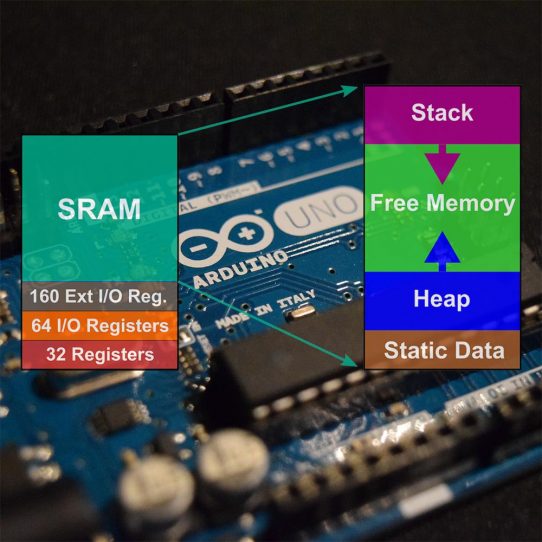
SRAM Management
This post is a journey into the depths of SRAM, Heap and Stack. How are variables stored there? What should be considered when using strings? Here you will find the answers.
Read More
Pointers and references
Pointers and references are very useful, but equally confusing, especially for beginners. This is an attempt to bring some light into the darkness.
Read More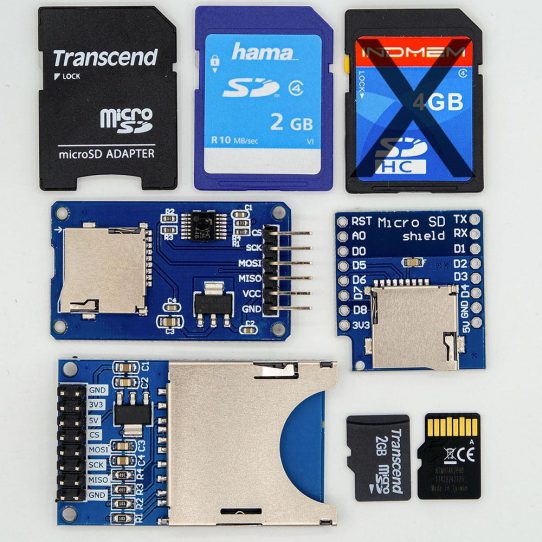
SD cards and SD card modules
SD cards are the medium of choice for storing large amounts of data. I show how to control SD card modules with the Arduino.
Read More
Creating Libraries and Classes – Part II
In the second part of the post about libraries and classes, I use the MPU6050 to show how you write Arduino libraries for sensors or other devices to be controlled and what typical issues arise.
Read More
Creating Libraries and Classes – Part I
This post is part 1 of a crash course on libraries and classes. It is designed to help you get started with this complex topic.
Read More
nRF24L01 – 2.4 GHz radio modules
Using the nRF24L01 and the RF24 library, you can exchange data between microcontrollers via 2.4 GHz radio. I show how it works.
Read More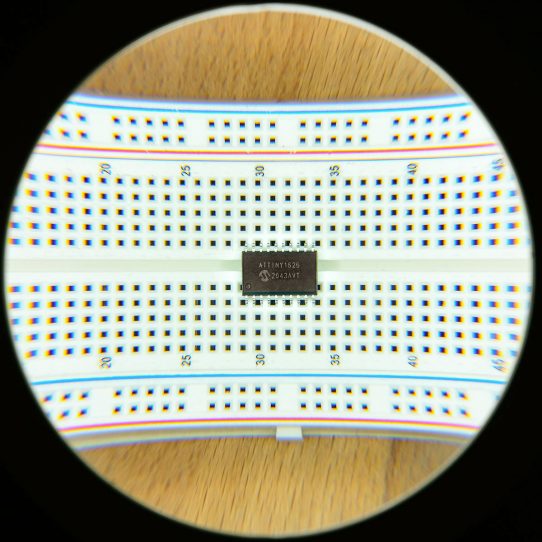
Using megaTinyCore
Thanks to the package megaTinyCore, you can easily program the ATtinys of the tinyAVR series 0, 1 and 2 with Arduino code. I present several options for the upload of your setches.
Read More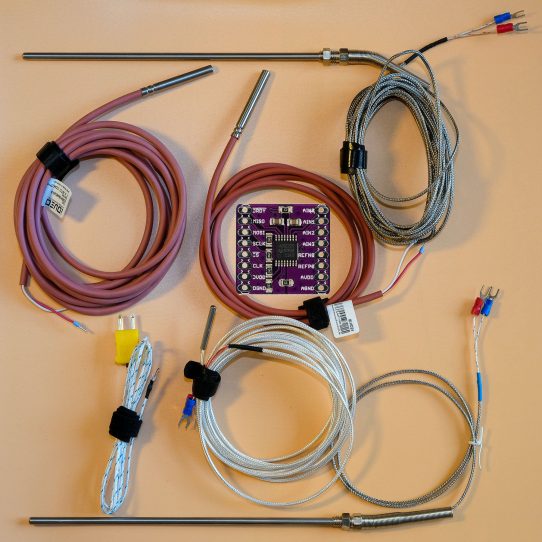
ADS1220 – Part 2: Applications
About this Post In the last post, I introduced the ADS1220 24-bit, 4-channel A/D converter and my associated library. In this sequel, I will show you how to…
Read More